HP
Redesigning a revenue-critical experience inside a siloed, enterprise-driven system.
Context
Context
Context
Context
CLIENT
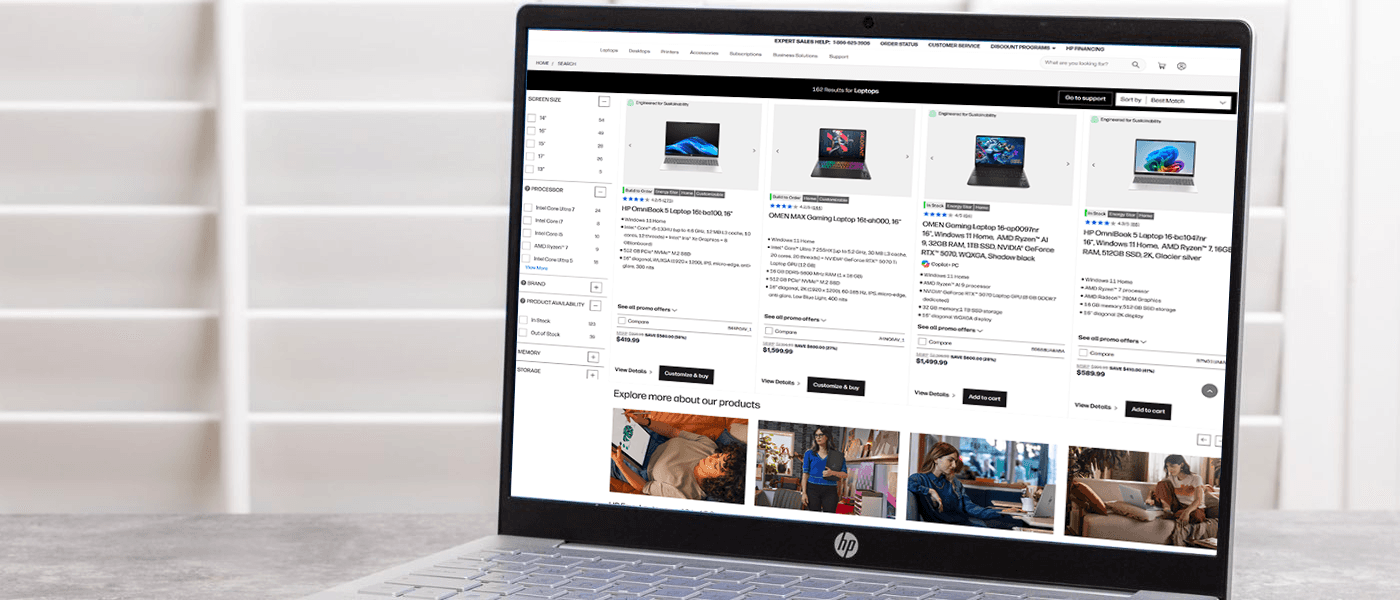
HP.com Store: Global E-commerce, Onsite Search
role & timeline
Senior Product Designer, responsible for Onsite Search (Worldwide)
Mar to Dec 2024
Senior Product Designer, responsible for Onsite Search (Worldwide)
Mar to Dec 2024
operating context
Global search sat at the intersection of multiple business units, regions, and priorities, with distributed ownership and strong commercial constraints.
my contribution
Beyond design execution, I played a de facto product leadership role, driving alignment and evidence-based decision-making across teams
Beyond design execution, I played a de facto product leadership role, driving alignment and evidence-based decision-making across teams
Problem Statement
Problem Statement
Problem Statement
PROBLEM:
HP’s website reflected internal organization rather than user needs, splitting search results across internal silos (Shop, Explore, Support). This made product discovery confusing and created a revenue bottleneck at a high-intent moment.
Contraints: Maintain internal content ownership; integrate cross-sell; preserve promotional messaging.
GOAL:
Redesign the search experience to prioritize products, streamline discovery, and reduce cognitive load, while respecting internal content ownership.
Outcome: +44% YoY revenue from search | Clearer product discovery | Reduced cognitive load
Strategic Diagnosis
Strategic Diagnosis
Strategic Diagnosis
Strategic Diagnosis
Before designing screens, I diagnosed the “organizational UX” - how internal structures, incentives, and power dynamics were shaping the user experience.
Before designing screens, I diagnosed the “organizational UX” - how internal structures, incentives, and power dynamics were shaping the user experience.
UX depended on alignment, not visuals. At HP, impact starts with having the right stakeholders on your side.
Silos = power, not just content. Can't be removed without intentional upper management demand
Additive culture > subtractive culture. Features are easy to add, almost impossible to remove
Therefore, I redesigned the decision flow first, and only then the interface.
Therefore, I redesigned the decision flow first, and only then the interface.
Approach
Approach
Approach
Approach
Evidence = stakeholders acceptance → proactively requesting and seeking for data
Evidence = stakeholders acceptance → proactively requesting and seeking for data
QUALITATIVE INSIGHTS
Only ~30% of users reached priced product tiles
Users didn’t understand how search was structured
Many browsed without converting
QUANTIATIVE DATA INSIGHTS
High drop-off in search
Poor commercial performance despite strong traffic
Elevated drop rate
REFRAMED CHALLENGE
From “How do we redesign search?” to “Why is search losing money?”
QUALITATIVE INSIGHTS
Only ~30% of users reached priced product tiles
Users didn’t understand how search was structured
Many browsed without converting
QUANTIATIVE DATA INSIGHTS
High drop-off in search
Poor commercial performance despite strong traffic
Elevated drop rate
REFRAMED CHALLENGE
From “How do we redesign search?” to “Why is search losing money?”
Exectution
Exectution
Exectution
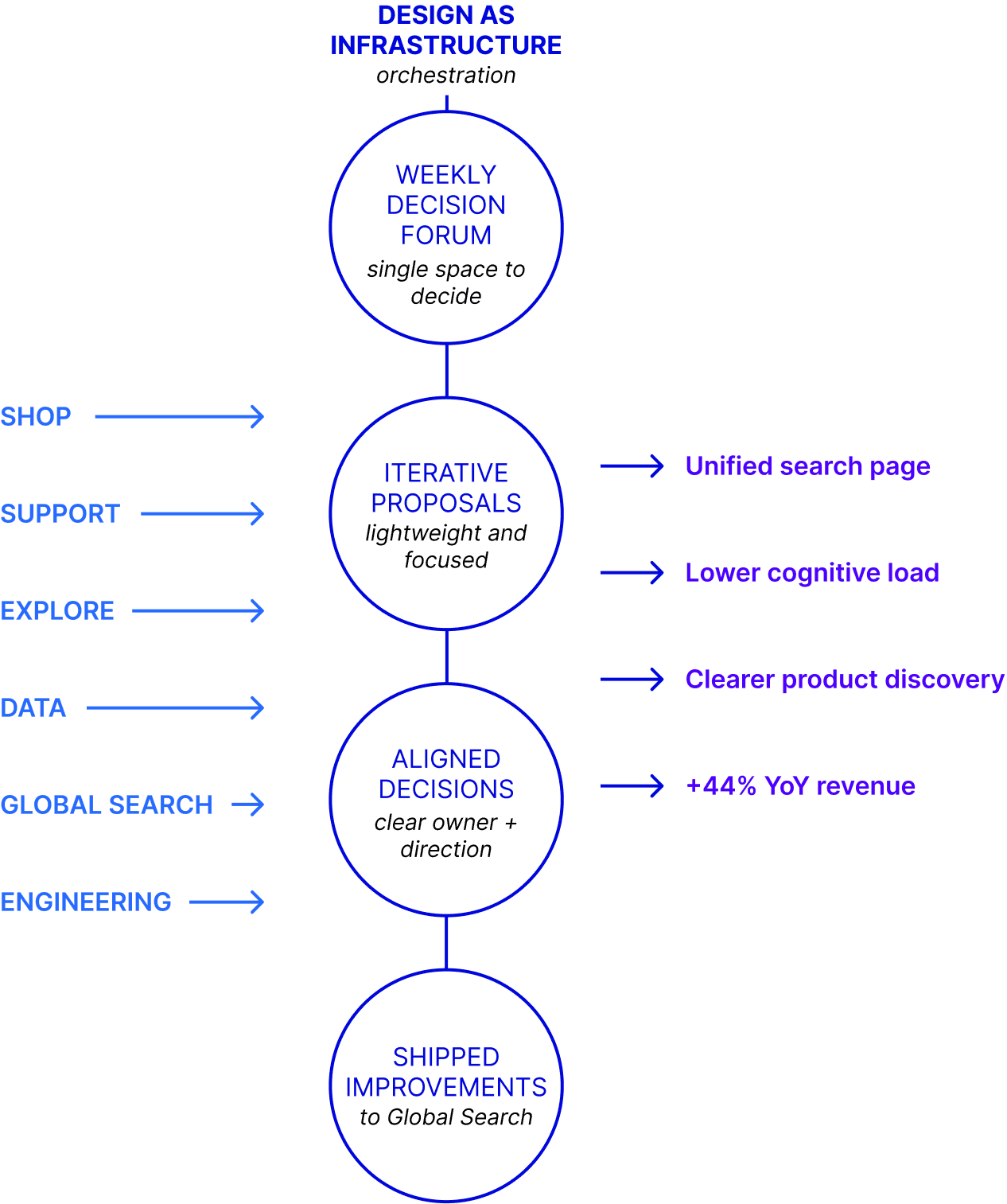
From UI production → Decision enablement
Execution focused less on interface production and more on unlocking decisions across teams.
Weekly cross-team sessions as the single decision forum
Iterative proposals designed to be reviewed and approved synchronously
From UI production → Decision enablement
Execution focused less on interface production and more on unlocking decisions across teams.
Weekly cross-team sessions as the single decision forum
Iterative proposals designed to be reviewed and approved synchronously
Exectution
Exectution
Design as an alignment tool
To avoid ownership conflicts, I used design strategically.
Tailored designs to each team's decision-makers’ priorities
Detail intentionally reduced where it didn't influence outcomes
Communication was centralized in shared meetings to keep alignment visible
Exectution
Exectution
Final Solution: Then vs. Now
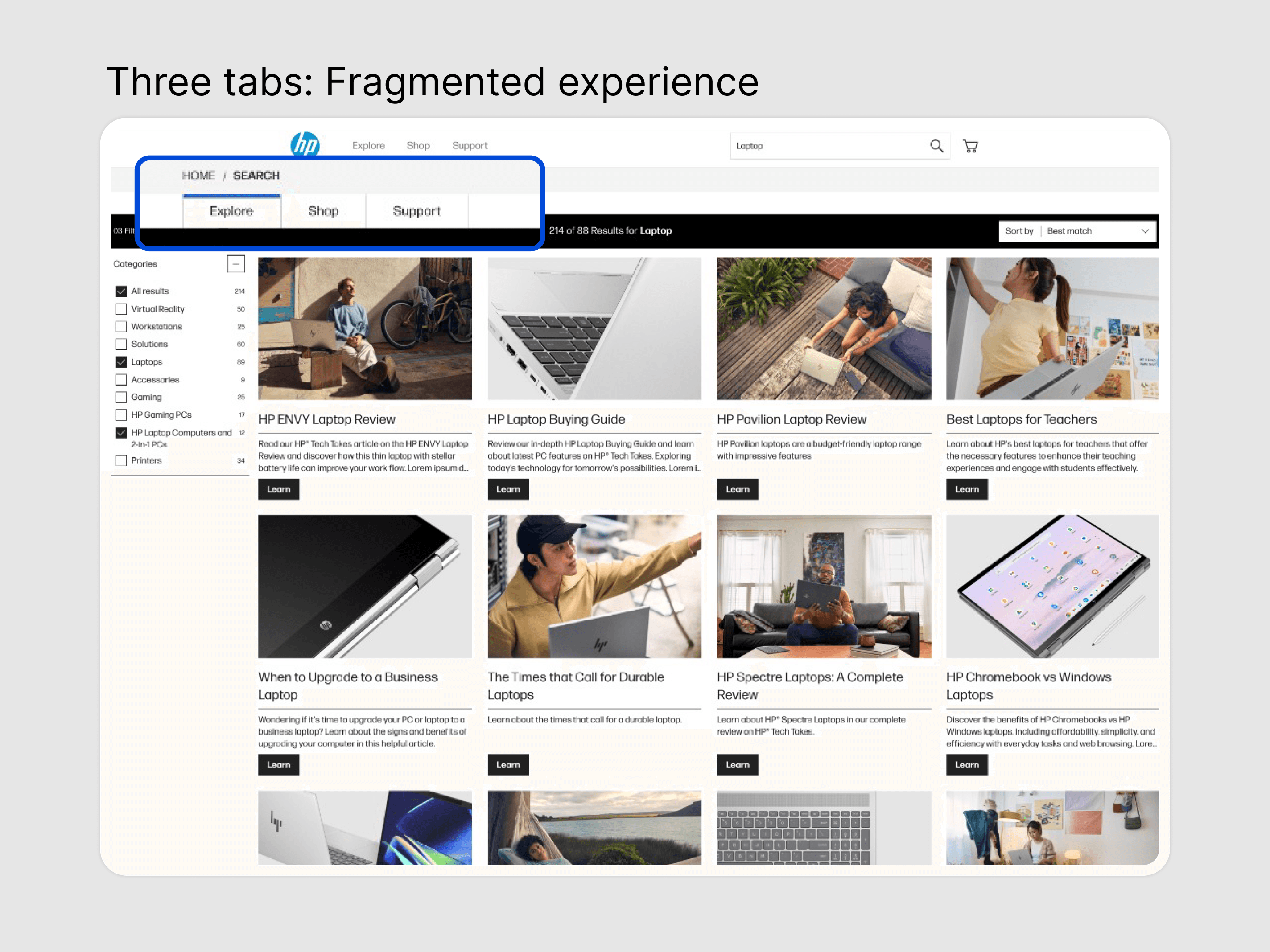
Then: Tabs as bottleneck
Splitting Search across Explore, Shop, and Support created a fragmented experience that confused users and prevented them from reaching actionable product results.
Exectution
Exectution
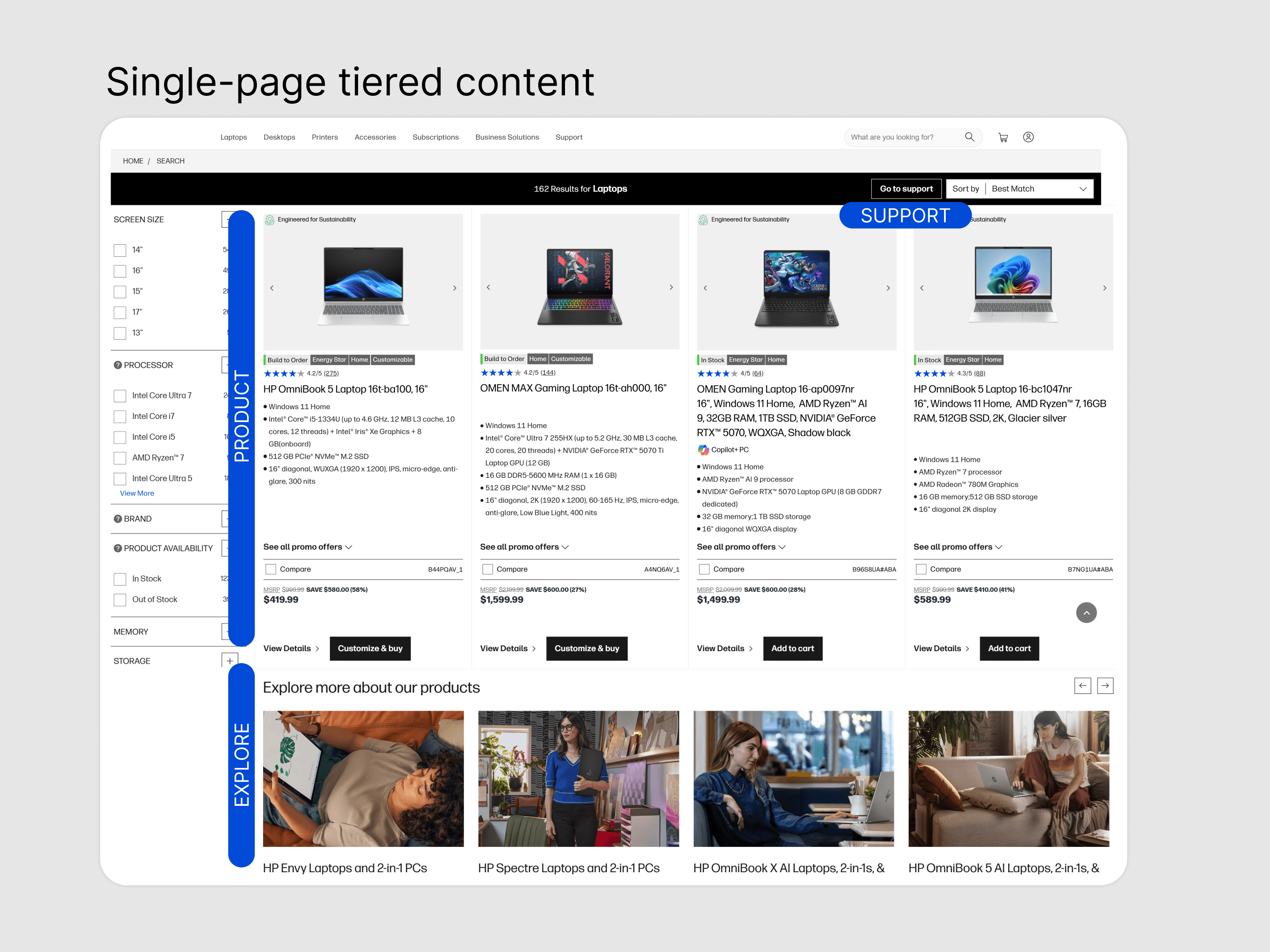
Final Solution: Then vs. Now
Now: Silos reoriented around user intent
Shop = the primary search narrative (products first)
Support = an omnipresent secondary action
Explore = contextual cross-sell content
Exectution
Exectution
Design as an alignment tool
To avoid ownership conflicts, I used design strategically.
Tailored designs to each team's decision-makers’ priorities
Detail intentionally reduced where it didn't influence outcomes
Communication was centralized in shared meetings to keep alignment visible
Exectution
Exectution
Exectution
Final Solution: Then vs. Now
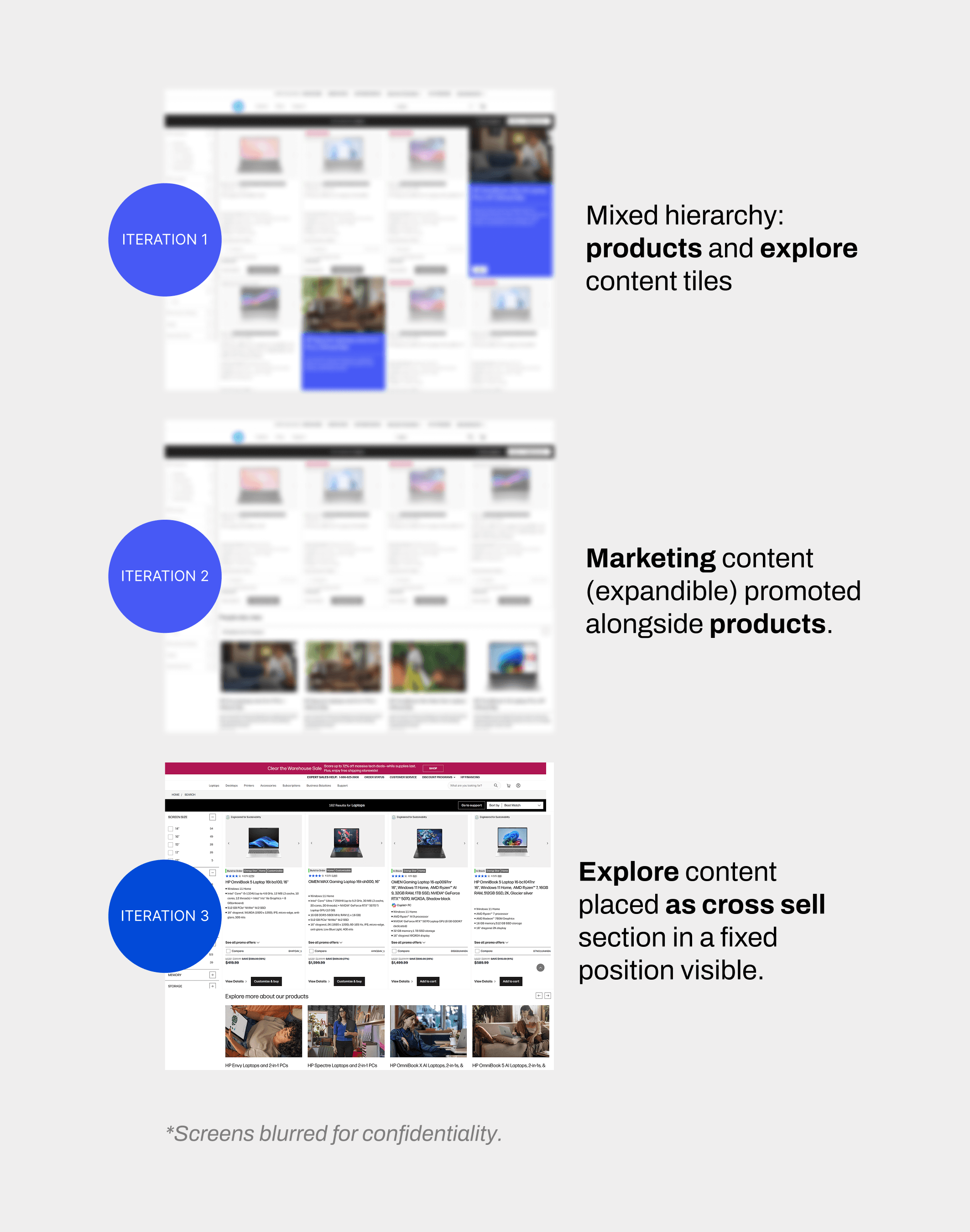
I approached the project with three principles, that guided every design decision:
Final Solution: Then vs. Now
Then: Tabs as bottleneck
Then: Tabs as bottleneck
Splitting Search across Explore, Shop, and Support created a fragmented experience that confused users and prevented them from reaching actionable product results.
Exectution
Exectution
Exectution
Final Solution: Then vs. Now
I approached the project with three principles, that guided every design decision:
Final Solution: Then vs. Now
Now: Silos reoriented around user intent
Now: Silos reoriented around user intent
Shop = the primary search narrative (products first)
Support = an omnipresent secondary action
Explore = contextual cross-sell content
Outcome & Key Insights
Outcome & Key Insights
Outcome & Key Insights
Outcome & Key Insights
Outcome
+44% YoY revenue from search
Clearer product discovery in high-intent flows
Reduced cognitive load without organizational conflict
A unified experience built on the same core page
my personal impact
This project sat at the intersection of user clarity and commercial pressure.
The impact of my role reduced harm while maximizing business outcomes.
OUTCOME 1
+44% YoY revenue from search
OUTCOME 2
Clearer product discovery in high-intent flows
Clearer product discovery in high-intent flows
OUTCOME 3
Reduced cognitive load without organizational conflict
Reduced cognitive load without organizational conflict
Reduced cognitive load without organizational conflict
OUTCOME 4
A unified experience built on the same core page
A unified experience built on the same core page
my personal impact
This project sat at the intersection of user clarity and commercial pressure.
The impact of my role reduced harm while maximizing business outcomes.
Learnings
Learnings
Learnings
Learnings
In large organizations, correctness matters less than survivability
In large organizations, correctness matters less than survivability
In large organizations, correctness matters less than survivability
Evidence must be translated, not presented raw
Evidence must be translated, not presented raw
Evidence must be translated, not presented raw
UX impact depends on when you push, not just what you push
UX impact depends on when you push, not just what you push
UX impact depends on when you push, not just what you push
Sometimes the most responsible decision is not fixing everything
Sometimes the most responsible decision is not fixing everything
Sometimes the most responsible decision is not fixing everything
Problem Statement
Problem Statement
PROBLEM:
HP’s website reflected internal organization rather than user needs, splitting search results across internal silos (Shop, Explore, Support). This made product discovery confusing and created a revenue bottleneck at a high-intent moment.
Contraints: Maintain internal content ownership; integrate cross-sell; preserve promotional messaging.
GOAL:
Redesign the search experience to prioritize products, streamline discovery, and reduce cognitive load, while respecting internal content ownership.
Outcome: +44% YoY revenue from search | Clearer product discovery | Reduced cognitive load
Exectution
Exectution
From UI production → Decision enablement
Execution focused less on interface production and more on unlocking decisions across teams.
Weekly cross-team sessions as the single decision forum
Iterative proposals designed to be reviewed and approved synchronously
Exectution
Exectution
Design as an alignment tool
To avoid ownership conflicts, I used design strategically.
Tailored designs to each team's decision-makers’ priorities
Detail intentionally reduced where it didn't influence outcomes
Communication was centralized in shared meetings to keep alignment visible